Canonical and noncanonical NF-kappa B signaling in uveal melanoma: mechanisms, microenvironment, and therapeutic modulation
Medical hypothesis discovery and innovation in ophthalmology,
Vol. 14 No. 4 (2025),
17 December 2025
,
Page 216-232
https://doi.org/10.51329/mehdiophthal1534
Abstract
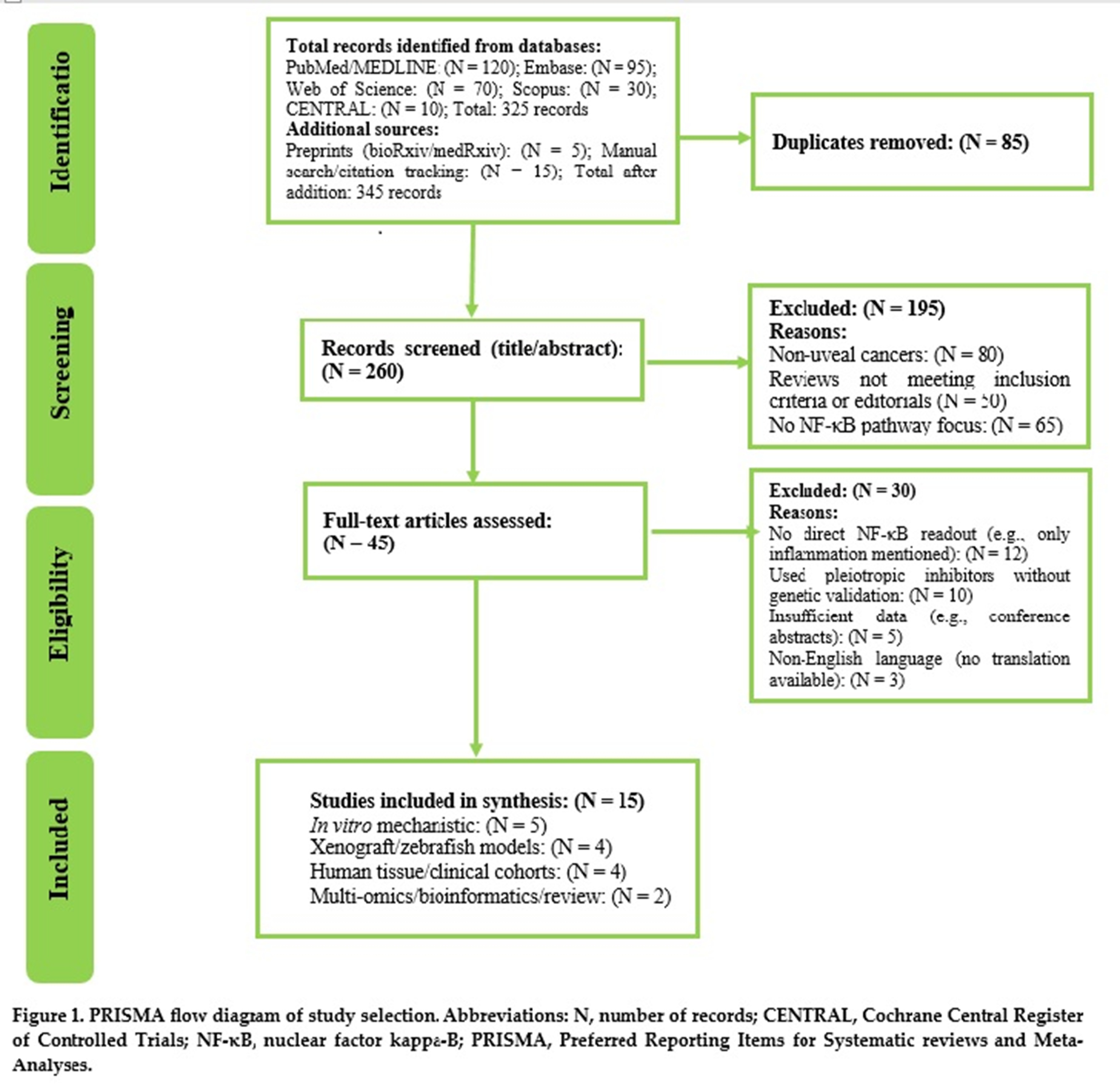
Background: Uveal melanoma (UM) is an aggressive intraocular malignancy with high metastatic potential to the liver and poor prognosis. The nuclear factor kappa B (NF-kB) pathway, comprising the canonical and noncanonical branches, has been involved in UM development, tumor-microenvironment communication, and drug resistance. This review consolidates the evidence for NF-kB involvement in UM pathogenesis and therapeutic target value.Methods: A comprehensive search of PubMed/MEDLINE, Embase, Web of Science, Scopus, and the Cochrane CENTRAL database was performed from inception to June 2025. Studies investigating NF-kB activation, functional dependencies, genetic or microenvironmental modulators, or therapeutic interventions in UM were eligible. Included designs comprised original observational or experimental research, including mechanistic in vitro studies, animal models, and human tissue–based prognostic or correlative studies. English-language articles and relevant review studies addressing the research question were considered. Exclusion criteria included editorials, commentaries, conference abstracts with insufficient data, case reports lacking mechanistic insights, non-UM cancers without validated UM models, studies mentioning inflammation or NF-kB targets without direct NF-kB readouts, and those using pleiotropic inhibitors without genetic validation or pathway-specific evidence. Appropriate design-specific tools were applied to assess risk of bias.
Results: Canonical NF-kB signaling is mechanistically related to UM cell survival, proliferation, and migration, as shown by pharmacologic inhibition like BAY11-7082, and niclosamide and genetic modulation like microRNA-9. Noncanonical signaling is associated with invasive, immune-replenished tumors and liver metastasis yet has limited direct functional data. Deficiency in BRCA1-associated protein-1 (BAP1) and tumor necrosis factor alpha-enriched microenvironments control NF-kB activity, but there is conflicting data on the function of BAP1. Therapeutic targeting of NF-kB consistently suppresses UM phenotypes in vitro and in vivo, but pleiotropic inhibitor effects require confirmation.
Conclusions: NF-kB signaling, particularly the canonical branch, is required for UM malignancy, while noncanonical signaling is linked with high-risk features. Branch-specific genetic manipulations and clinically relevant models should be employed in future research to maximize therapeutic strategies.
- Abstract Viewed: 0 times
- Full Text PDF Downloaded: 0 times


